
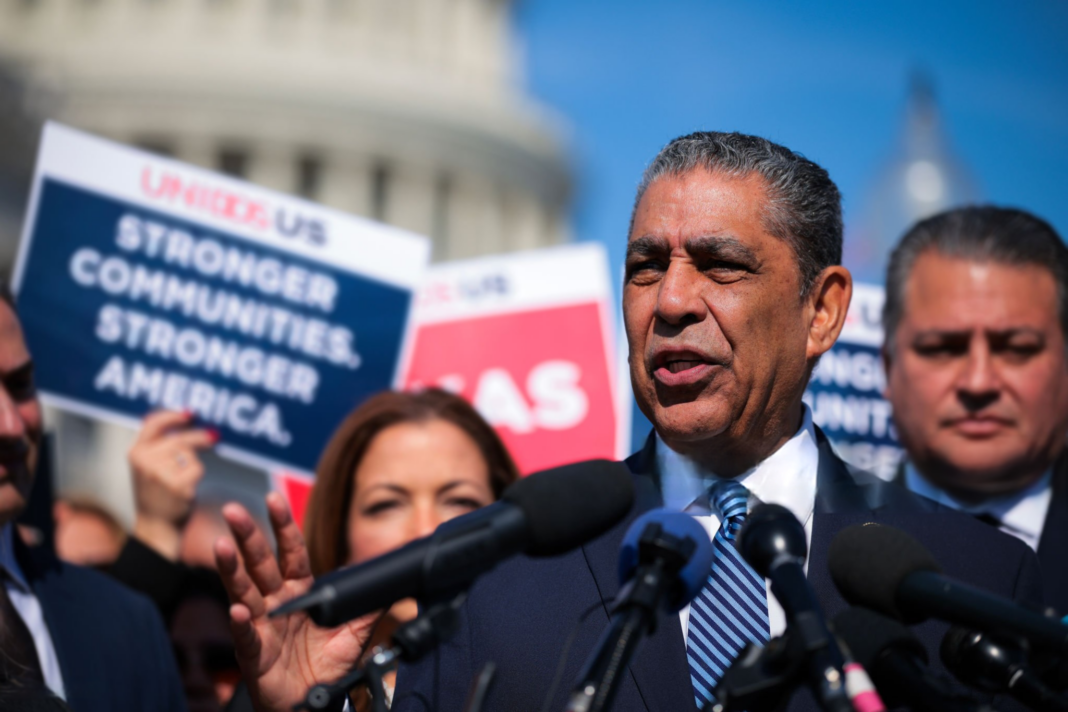
La polémica en torno a la inmigración en Estados Unidos ha vuelto al centro del debate político tras un reciente ataque por parte del Comité Nacional Republicano del Congreso (NRCC) contra el congresista Adriano Espaillat. El legislador demócrata por Nueva York, de origen dominicano, fue erróneamente etiquetado como “inmigrante ilegal” por el NRCC en una publicación en redes sociales, generando una oleada de críticas a nivel nacional. Este episodio no solo revela la persistencia de la desinformación en el discurso político, sino también el uso de estrategias retóricas que exacerban divisiones sociales y culturales.
El NRCC, en una publicación en la red social X (antes Twitter), atacó a los demócratas por haber seleccionado a Adriano Espaillat como portavoz de la respuesta en español al discurso del expresidente Donald Trump. En el mensaje, el comité escribió: “Los demócratas literalmente eligieron a un inmigrante ilegal para dar su respuesta al discurso del presidente Trump”. El comentario fue acompañado de un video en el que Espaillat critica la presidencia de Trump, calificándola como un “reino del terror”.
Dicha afirmación no solo es errónea, sino que ignora deliberadamente la trayectoria legal que llevó a Espaillat a convertirse en ciudadano estadounidense y, eventualmente, en congresista. La acusación ha sido percibida por muchos como un intento de desacreditar a un político basado en su origen étnico y antecedentes migratorios, más que en sus méritos o ideas.
Espaillat no tardó en responder a las declaraciones del NRCC. En diálogo con la prensa, lamentó que el Partido Republicano esté siendo “invadido por xenófobos que piensan que cualquiera que no se parezca a ellos es un ilegal”. Agregó que había recibido muestras de apoyo de todo el país, señal de que muchas personas reconocen la naturaleza discriminatoria del ataque.
El legislador relató su historia personal: llegó a Estados Unidos cuando era niño, junto a sus padres, con una visa de visitante. Posteriormente, la familia regresó a la República Dominicana para seguir el camino legal establecido por las leyes migratorias, obteniendo su residencia permanente antes de regresar a territorio estadounidense. Con el tiempo, Espaillat se naturalizó como ciudadano y más adelante fue electo miembro del Congreso.
La historia de Adriano Espaillat representa, en palabras del propio congresista, “una gran historia americana”. Su trayectoria de superación, esfuerzo y cumplimiento de la ley refleja el sueño de millones de inmigrantes que buscan una vida mejor en Estados Unidos. Sin embargo, el uso de términos como “ilegal” de forma imprecisa y despectiva no solo distorsiona esa realidad, sino que también contribuye a un clima de hostilidad hacia comunidades inmigrantes.
El ataque del NRCC contra el congresista Adriano Espaillat pone de manifiesto la necesidad urgente de un discurso político más honesto, respetuoso y basado en hechos verificables. En lugar de fomentar la división mediante acusaciones infundadas, es vital reconocer y celebrar las historias de aquellos que, como Espaillat, han seguido el camino legal y han contribuido de manera significativa al país. La experiencia del congresista no es una excepción, sino una prueba de que la diversidad y la inclusión son pilares fundamentales de la identidad estadounidense.
A Baseless Accusation: Congressman Adriano Espaillat and the Ongoing U.S. Immigration Debate
The controversy surrounding immigration in the United States has once again taken center stage following a recent attack by the National Republican Congressional Committee (NRCC) against Congressman Adriano Espaillat. The Dominican-American lawmaker from New York was falsely labeled an “illegal immigrant” in a social media post by the NRCC, sparking national outrage. This incident underscores not only the persistence of misinformation in political discourse but also the use of divisive rhetoric to deepen social and cultural rifts.
In a post on the social media platform X (formerly Twitter), the NRCC criticized Democrats for choosing Espaillat to deliver their Spanish-language response to former President Donald Trump’s address. The message read, “Democrats literally chose an illegal immigrant to give their response to President Trump’s address,” and was accompanied by a video of Espaillat describing Trump’s presidency as a “reign of terror.”
This statement is not only inaccurate but also deliberately disregards the legal path that led Espaillat to become a U.S. citizen and, ultimately, a congressman. Many see the accusation as an attempt to discredit a politician based on his ethnic background and immigration history rather than his accomplishments or ideas.
Espaillat swiftly responded to the NRCC’s claims. Speaking to the press, he expressed regret that the Republican Party had been “invaded by xenophobes that think that anybody that doesn’t look like them is an illegal.” He further noted that he had received support from across the country, a clear indication that many recognize the discriminatory nature of the attack.
The congressman recounted his personal story: as a child, he came to the United States with his parents on a visitor’s visa. The family later returned to the Dominican Republic to follow the legal immigration process, secured green cards, and returned to the U.S. legally. Eventually, Espaillat became a naturalized citizen and was elected to Congress.
Adriano Espaillat’s journey is, in his own words, “a great American story.” His path of perseverance, legal compliance, and public service reflects the aspirations of millions of immigrants seeking a better life in the U.S. However, the use of the term “illegal” in a misleading and derogatory manner not only distorts that narrative but also fosters a hostile climate toward immigrant communities.
The NRCC’s attack on Congressman Adriano Espaillat highlights the urgent need for a political discourse rooted in truth, respect, and verifiable facts. Rather than fueling division through baseless accusations, it is vital to acknowledge and celebrate the stories of those who, like Espaillat, have followed the legal process and made significant contributions to the country. His experience is not an anomaly—it is proof that diversity and inclusion are essential pillars of American identity.