
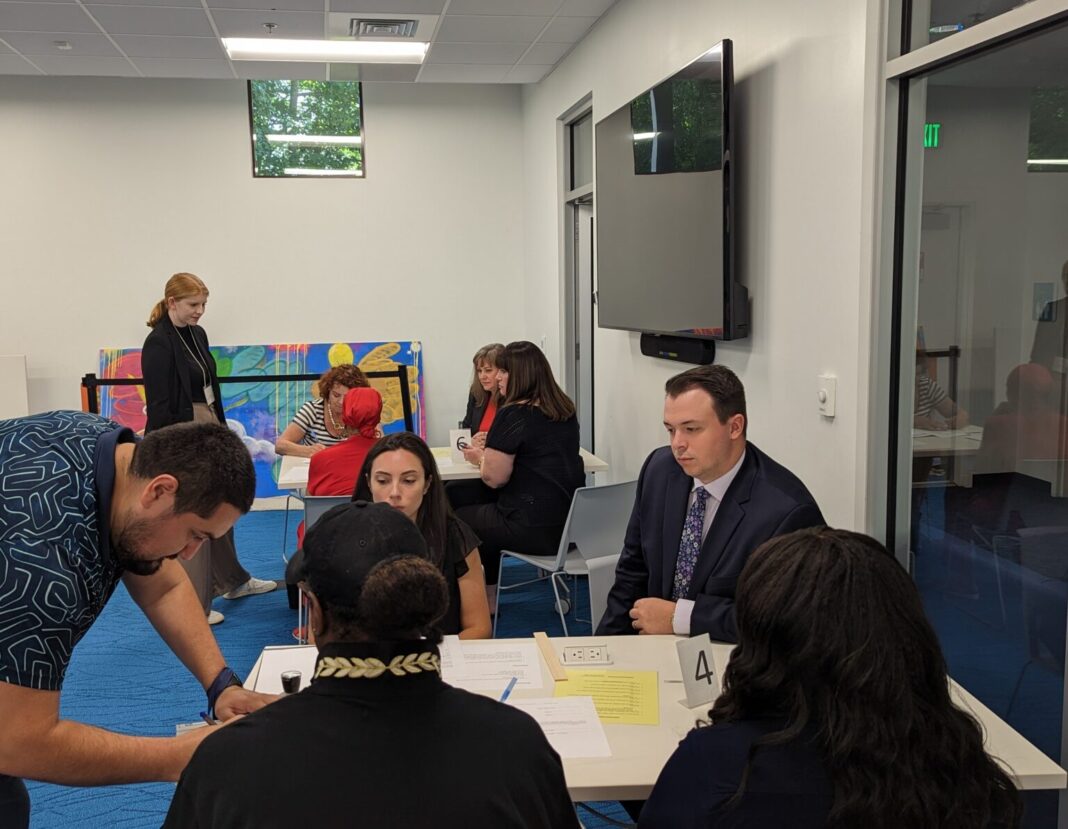
Desde 1967, el Charlotte Center for Legal Advocacy (CCLA) ha sido un pilar fundamental para la comunidad de bajos ingresos en Charlotte y sus alrededores. A lo largo de los años, ha ofrecido asistencia legal y apoyo a personas en situaciones vulnerables, desde veteranos sin hogar hasta inmigrantes no acompañados, pasando por ancianos en disputas fiscales y víctimas de fraudes financieros. Sin embargo, el futuro de esta institución está en peligro debido a los drásticos recortes de fondos federales, lo que amenaza la continuidad de sus programas y la estabilidad de los miles de beneficiarios que dependen de ellos.
El impacto de los recortes federales en el CCLA
Los recientes recortes de fondos ya han comenzado a afectar las operaciones del CCLA, y se prevé que más reducciones ocurran en los próximos meses. Según Cassidy Estes-Rogers, directora de operaciones interina del centro, la situación ha sido una verdadera “montaña rusa”. Entre los recortes más preocupantes se encuentra la reducción del 90 % en el programa de inscripción a Medicaid, en el cual participa el CCLA, así como la cancelación de un contrato de $230,000 destinado a la reasentación de refugiados.
Alex Castle, presidente del comité de finanzas de la junta directiva del CCLA, expresó su preocupación ante la falta de alternativas suficientes para compensar estos recortes. Aunque la organización recibe financiamiento estatal, del condado y de fuentes privadas, estas contribuciones no serán suficientes para cubrir la pérdida de apoyo federal.
Casos que reflejan la importancia del CCLA
El trabajo del CCLA trasciende los simples procesos legales; es un apoyo continuo para personas que enfrentan crisis de vida. Los casos legales que maneja esta organización suelen prolongarse durante años, lo que significa que la interrupción de su financiamiento afectará directamente a sus beneficiarios en procesos que aún no han concluido.
Apoyo a migrantes en situación vulnerable
Un claro ejemplo de la labor del CCLA es el caso de dos niños hondureños que recientemente fueron representados en la corte de inmigración. Su familia había sido víctima de extorsión y violencia en su país de origen, por lo que buscaban refugio en Estados Unidos. Gracias a la intervención del CCLA, lograron obtener los documentos iniciales que les permitirán permanecer en el país, pero el proceso aún no ha terminado y requiere seguimiento legal.
Justicia para un veterano sin hogar
Otro caso emblemático es el de un veterano de la Marina de los EE.UU. que, tras desarrollar un trastorno de estrés postraumático (TEPT) debido al combate, fue dado de baja con un estatus “otro que honorable”. Para sobrellevar su trauma, recurrió al consumo de marihuana, lo que le impidió acceder a los beneficios para veteranos. Durante cinco años, el CCLA luchó por su caso hasta lograr que recibiera los beneficios que merecía.
El futuro incierto del CCLA y sus beneficiarios
Castle enfatizó que, aunque los fondos desaparezcan, los problemas de sus clientes no lo harán. Los expedientes abiertos, las luchas legales y las necesidades de sus beneficiarios siguen vigentes, y sin el CCLA, miles de personas quedarán desamparadas.
La incertidumbre sobre el futuro del CCLA pone en riesgo a las comunidades más vulnerables de Charlotte. La reducción o eliminación de estos programas significaría un golpe devastador para quienes dependen de estos servicios legales para sobrevivir, buscar justicia o proteger sus derechos.
Conclusión
El Charlotte Center for Legal Advocacy ha sido una pieza clave en la defensa de los derechos de los más desfavorecidos durante más de 50 años. Sin embargo, los recortes de financiamiento federal amenazan su capacidad de seguir brindando ayuda. Casos como el de los niños migrantes o el veterano sin hogar reflejan la importancia de su labor y el impacto positivo en la comunidad. En un momento en el que tantas personas dependen del CCLA, es crucial que se exploren soluciones y fuentes alternativas de financiamiento para garantizar la continuidad de su misión.
The Charlotte Center for Legal Advocacy at Risk The Effects of Federal Funding Cuts on Its Social Work
Since 1967, the Charlotte Center for Legal Advocacy (CCLA) has been a fundamental pillar for low-income communities in Charlotte and its surroundings. Over the years, it has provided legal assistance and support to vulnerable individuals, from homeless veterans to unaccompanied immigrants, seniors in tax disputes, and victims of financial fraud. However, the future of this institution is in jeopardy due to drastic federal funding cuts, threatening the continuity of its programs and the stability of the thousands of beneficiaries who rely on them.
The Impact of Federal Cuts on CCLA
Recent funding cuts have already begun to affect CCLA’s operations, with more reductions expected in the coming months. According to interim Chief Operating Officer Cassidy Estes-Rogers, the situation has been a “rollercoaster.” Among the most concerning cuts is the 90% reduction in the Medicaid enrollment program, in which CCLA participates, as well as the cancellation of a $230,000 contract for refugee resettlement work.
Alex Castle, chair of CCLA’s finance committee, expressed concern about the lack of sufficient alternatives to compensate for these cuts. While the organization receives funding from the state, county, and private sources, these contributions will not be enough to offset the loss of federal support.
Cases That Highlight CCLA’s Importance
CCLA’s work goes beyond legal processes; it provides continuous support to people facing life crises. The legal cases handled by the organization often extend over several years, meaning that the disruption of its funding will directly impact beneficiaries whose cases remain unresolved.
Supporting Vulnerable Migrants
One clear example of CCLA’s work is the case of two Honduran children recently represented in immigration court. Their family had been victims of extortion and violence in their home country, seeking refuge in the United States. Thanks to CCLA’s intervention, they obtained initial documents allowing them to stay in the country, but the process is far from over and still requires legal follow-up.
Justice for a Homeless Veteran
Another emblematic case is that of a U.S. Navy veteran who, after developing post-traumatic stress disorder (PTSD) due to combat, received an “other than honorable” discharge. To cope with his trauma, he turned to marijuana use, which disqualified him from receiving veterans’ benefits. For five years, CCLA fought for his case until he was finally granted the benefits he rightfully deserved.
The Uncertain Future of CCLA and Its Beneficiaries
Castle emphasized that while funding may disappear, their clients’ problems will not. The open case files, ongoing legal battles, and beneficiaries’ needs remain, and without CCLA, thousands will be left without support.
The uncertainty surrounding CCLA’s future puts Charlotte’s most vulnerable communities at risk. The reduction or elimination of these programs would be a devastating blow to those who rely on these legal services to survive, seek justice, or protect their rights.
Conclusion
For over 50 years, the Charlotte Center for Legal Advocacy has been a key player in defending the rights of the disadvantaged. However, federal funding cuts threaten its ability to continue providing assistance. Cases like those of migrant children or the homeless veteran illustrate the importance of its work and the positive impact on the community. At a time when so many people depend on CCLA, it is crucial to explore alternative funding sources to ensure the continuity of its mission.